Quiz Entry - updated: 2026.10.13
How do you read the output of ls -l /etc/passwd, for example -rw-r--r-- 1 root root 1820 … /etc/passwd?
The first character is the file type, the next nine are the rwx triplets for user, group and others, then come the link count, owner, group, size, date and name.
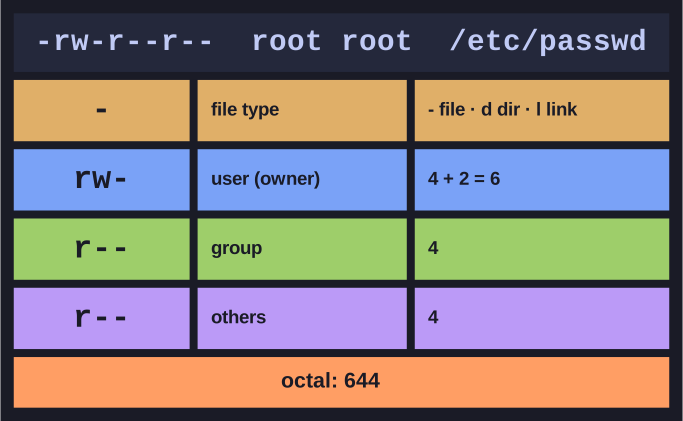
* One file-type character, then three rwx triplets; each triplet is one octal digit. *
Reading -rw-r--r-- 1 root root 1820 …:
-is the file type:-a regular file,da directory,la symbolic link (others:c/bdevices,ssocket,pnamed pipe).rw-is the owner's rights: read and write.r--is the group's rights: read only.r--is what others get: read only.1is the number of hard links,root rootthe owner and group,1820the size in bytes, then the modification time and the name.
A - in a permission position means that right is not set. This form is the symbolic notation. The same rights in octal are 644.
So /etc/passwd is a regular file that only root can change and that every user can read. That is intended: programs need to turn UIDs into names for everyone.
Go deeper:
 man7.org: ls(1) — the long listing format and all file-type letters.