How do Requirement Engineering, Requirement Management, and Solution Design differ?
Requirement Engineering creates and documents requirements; Requirement Management proves, synchronises and manages them; Solution Design searches for solutions and documents them. Engineering captures the problem, Management keeps it consistent over time, Design answers it.
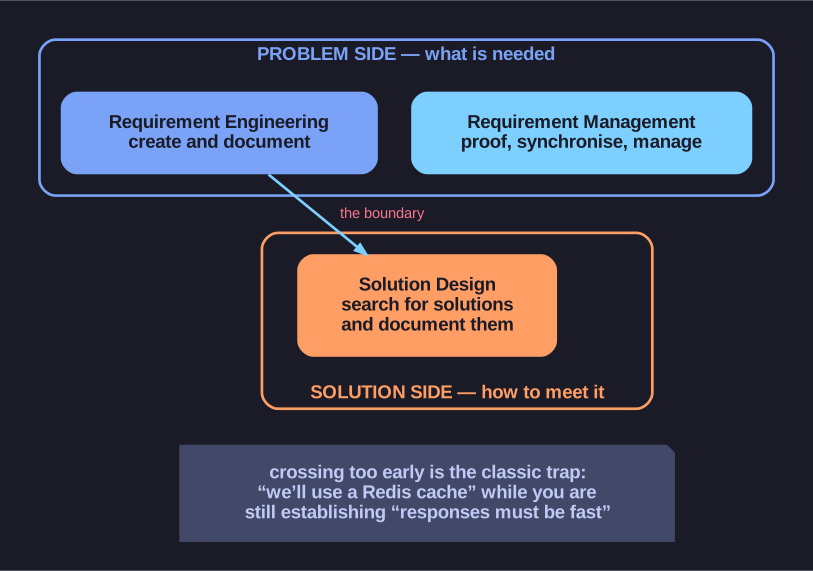
* Two of the three stay on the problem side — Solution Design is the one that crosses. *
These three are easy to blur, so it helps to keep them sharply separated:
| Discipline | What you do | Focus |
|---|---|---|
| Requirement Engineering | Create and document requirements | Capturing what is needed |
| Requirement Management | Proof, synchronise and manage requirements | Keeping requirements consistent, traceable and current |
| Solution Design | Search for solutions and document them | Working out how to meet the requirements |
The key boundary: Engineering and Management both stay on the problem side (what the system must do, and keeping that record clean), while Design crosses to the solution side (how to actually build it). Mixing them is the classic trap — jumping to "we will use a Redis cache" (Design) while you are still supposed to be establishing "responses must be fast" (Engineering). The damage is not stylistic: once a solution is named, the discussion stops discovering what was actually needed and starts defending the solution.
Tip: Engineering writes it, Management guards it, Design answers it.
Go deeper:
 Requirements management (Wikipedia) — what "guarding" the requirements involves once they exist.
- Requirements traceability (Wikipedia) — the mechanism that keeps each requirement tied to the design and the test that answer it.